Why do fats melt at different temperatures?
The melting point of fats is the temperature at which they become liquid. Fats and oils are both mostly composed of triglycerides. A triglyceride is composed of a glycerol backbone…
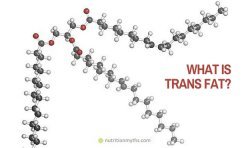
Trans fat: once considered a healthy alternative to butter, now banned in many countries. Find out what is trans fat, its history, what types and sources of trans fat are…
Lipids is a broad category that describes a group of about 7,000 fat-soluble, hydrophobic (not soluble in water) and naturally occurring organic compounds, found in animal or plant tissues. Lipids…
There is some evidence showing that water consumption may help reduce weight, but only in those individuals who are dieting for weight loss or for weight maintenance. In other words,…
A major health concern are industrial trans fatty acids (iTFAs) that are created during partial hydrogenation of oils. Trans fat foods refer mainly to the foods that are made with…
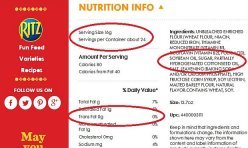
Reading labels is not as easy as it should be. Labels can be informative but also can be confusing or used to trick customers. It often requires a good knowledge…
Most of the harmful trans fatty acids (TFAs) in our diet come from partially hydrogenated oils, (only small percentage from ruminants) which involves high temperatures and high pressure. But does…
Not all high fiber foods are good for you! A significant percentage (in total 46%) of dietary fiber intake comes from foods with a high glycemic index and load: bread…
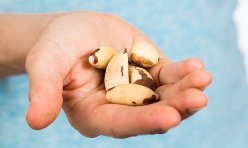
Brazil nuts are an excellent source of many minerals such as selenium, copper, magnesium and phosphorus, and a good source of zinc and manganese. Vitamins are not as abundant in…
Canned tuna is a popular food worldwide. It is used, for instance, on top of salads or as part of an afternoon snack. On the one hand, canned tuna seems…